You searched for "flat feet military disqualification" and landed on articles that have nothing to do with your child's situation. Those pieces are written for enlisted applicants going through MEPS. Your student is on the officer track, and DoDMERB plays by a different set of rules.
DoDMERB is the medical exam for Service Academy candidates and ROTC scholarship applicants. The standards reference DoDI 6130.03, but the workflow, waiver authorities, and timing differ from enlisted processing. The stakes are also different: a four-year scholarship or appointment, not an enlistment contract.
Most parents miss this. Flat feet DoDMERB rules under DoDI 6130.03-V1, Section 6.18.c(5) turn on two words: rigid or symptomatic. Either one disqualifies on its own. Families tend to focus entirely on pain, and never learn that a stiff, painless flatfoot can be disqualifying all by itself.
The difference between a quick qualification and a complicated waiver is rarely the diagnosis word. It comes down to whether the foot is flexible or rigid, whether it causes symptoms now, how prescribed orthotics read on paper, and whether the documentation tells a consistent story.
This guide covers the DoDMERB-versus-MEPS distinction, the verbatim regulation, the plantar fasciitis clause that catches families off guard, the five most common case patterns, what documentation actually decides waivers, and how the SMWA makes its call. It is written for parents of USMA, USNA, USAFA, USCGA, and USMMA candidates and ROTC scholarship applicants.
After this introduction, you understand why generic flat feet/military articles do not apply to your situation and what makes the DoDMERB process different.
Key Takeaways
- The two words that decide it are "rigid" and "symptomatic." DoDI 6.18.c(5) disqualifies pes planus that is rigid or symptomatic. Either one is enough on its own.
- A rigid flatfoot can disqualify with no pain at all. Structure counts, not just symptoms. This is the trigger most families never hear about.
- Flexible, asymptomatic flat feet typically qualify. If the arch still reforms on tiptoe and your child runs, jumps, and plays sports without chronic pain, the diagnosis alone is rarely the problem.
- Past surgery is not a trigger by itself. The standard names no surgical clause for pes planus. What matters is what the surgery was for and what the foot is like now.
- Plantar fasciitis has no waiting period. DoDI 6.18.c(7) reaches cases that are current or recurrent, so a pattern of repeat flare-ups counts no matter how long ago the last one was.
- Prescribed orthotics signal dependency. The Coast Guard Academy lists rigid prescribed orthotics as independently disqualifying, and other services scrutinize them carefully.
- A DQ from DoDMERB is not a final rejection. The Service Medical Waiver Authority at the commissioning source decides waivers, and competitive applicants frequently receive them.
DoDMERB Is Not MEPS: Why Officer-Track Families Need a Different Playbook
Most of what your search results said about flat feet and the military does not apply to your child. The top-ranking pages on "flat feet military disqualification" describe MEPS, the Military Entrance Processing Station that screens enlisted applicants. Service Academy candidates and ROTC scholarship applicants go through DoDMERB instead.
Both processes reference DoDI 6130.03. The workflow, waiver authorities, timing windows, and stakes are different.
What MEPS Does (and Why It Does Not Apply to You)
MEPS handles enlisted accession through a same-day in-person physical at a regional facility. None of this describes your student's officer-track path.
What DoDMERB Does for Academy and ROTC Candidates
DoDMERB stands for the Department of Defense Medical Examination Review Board. It reviews exams performed by contracted civilian providers (scheduled through DoDMETS, dodmets.com) for academy and ROTC scholarship applicants. The review issues one of three outcomes: medical qualification, an Additional Medical Information request (a Remedial), or a disqualification.
A DQ does not end the process. It triggers the Service Medical Waiver Authority review at the commissioning source.
Why the Distinction Matters for Flat Feet
DoDMERB review is paper-based. Your child's medical records carry the weight, not a same-day exam impression. Documentation strategy is everything. Records of orthotic use, podiatric visits, sports participation, and surgical reports all surface. Waiver authorities at academies and ROTC commands evaluate the whole candidate file, not just the foot.
The military is not looking for diagnosis words. It is looking at severity, recurrence, timing, function, and compatibility in an austere environment. — DoDMERB review principle for orthopedic conditions
After this section, you understand why MEPS-focused content does not apply to your child's case and why DoDMERB review hinges on documentation rather than a same-day exam.
What the Regulation Actually Says About Flat Feet
The full DoDMERB rule on flat feet is one line, and most parents only ever hear half of it. DoDI 6130.03-V1 is the active medical accession standard. Section 6.18.c(5) governs flat feet, and the DoDMERB DQ codes (D223.20 and adjacent) implement the rule operationally.
The Verbatim Rule
"Rigid or symptomatic pes planus (acquired or congenital)." — DoDI 6130.03-V1, Section 6.18.c(5)
Seven words, two independent triggers. Either one disqualifies.
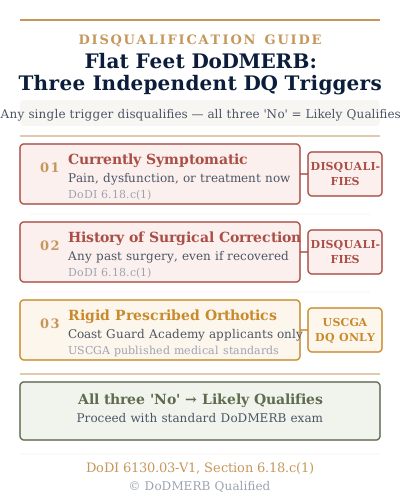
- Trigger 1: rigid. A structurally stiff flatfoot, whether or not it ever hurts.
- Trigger 2: symptomatic. Pain, dysfunction, or treatment now. A foot can be perfectly flexible and still fire this trigger.
Now notice what is not in that sentence. There is no clause about surgery. A prior flatfoot operation is not, on its own, a disqualifying trigger under 6.18.c(5). It still matters, because the operative report tells a reviewer what the foot was and what it became, but the surgery is evidence, not the trigger.
The DQ Codes DoDMERB Uses
DoDMERB applies specific disqualification codes that map back to the DoDI. The three most relevant to flat-feet cases:
- D223.20: Rigid or symptomatic pes planus (acquired or congenital). References DoDI 6.18.c(5).
- D223.40: Current or recurrent plantar fasciitis. References DoDI 6.18.c(7).
- D223.10: Clubfoot or pes cavus that prevents proper wearing of military footwear or is symptomatic. References DoDI 6.18.c(4).
The code language and the regulation language are the same words. If D223.20 appears on your child's letter, you are looking at 6.18.c(5), and you can read the standard your child was measured against directly.
The Triggers at a Glance
| Trigger | Regulation Source | What It Means For Your Child |
|---|---|---|
| Rigid pes planus | DoDI 6.18.c(5), first word | A stiff flatfoot disqualifies even with no pain |
| Symptomatic pes planus | DoDI 6.18.c(5), second word | Pain, dysfunction, or current treatment triggers DQ |
| Rigid prescribed orthotics | USCGA published standards | Coast Guard treats as separate trigger |
What "Symptomatic" Actually Means
Symptomatic, in the DoDMERB context, usually maps to one or more of the following:
- Chronic or recurrent pain in feet, arches, heels, or shins
- Pain that worsens with running, marching, or extended standing
- Documented podiatry visits or treatment in recent records
- Inability to participate in sports or PE without modification
- Reliance on prescribed orthotics, custom inserts, or arch supports for daily function
What "Rigid" Means in a Pediatric Foot
Rigid pes planus is the structural form. The arch does not reform when the child stands on tiptoes or sits with feet unweighted. Flexible pes planus, common in kids and teens, is the more forgiving variant. Clinicians distinguish them with the Jack test and heel rise test, both of which a podiatrist or orthopedist can document in a clinical note.
This is the half of the rule families skip. Because 6.18.c(5) reads "rigid or symptomatic," a rigid flatfoot can disqualify a child who has never had a painful day in their life. If no provider has ever written down which type your child has, that single clinical note is the most useful thing you can obtain before the exam.
The Coast Guard Academy Wrinkle
The Coast Guard Academy publishes its own list of common disqualifying conditions and explicitly calls out "use of rigid, prescribed orthotics" as an independent disqualifier. This is a stricter operational reading than other services apply. If USCGA is on your child's list, the orthotic question matters more than at any other commissioning source.
After this section, you can quote the exact regulation, identify which trigger (if any) applies to your child, and understand why orthotic use can quietly tip a borderline case.
Related: DoDMERB Waiver Process: Step-by-Step Parent Guide
Plantar Fasciitis: The Separate Clause With No Waiting Period
Your child's flat feet might qualify, and the plantar fasciitis they had two summers ago can still disqualify them on a separate clause. DoDI 6130.03-V1, Section 6.18.c(7) handles plantar fasciitis separately from pes planus. Many flat-footed teens develop it as a downstream effect, and DoDMERB scores it as its own condition.
The Verbatim Rule
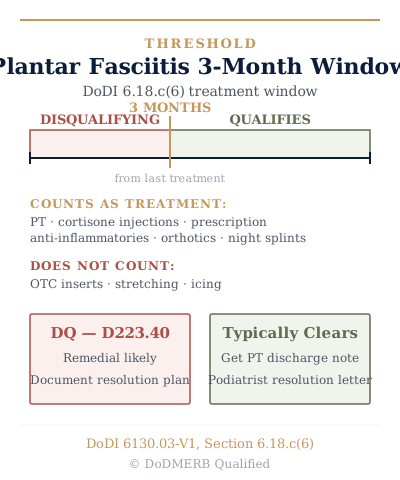
"Current or recurrent plantar fasciitis." — DoDI 6130.03-V1, Section 6.18.c(7)
Four words, and the second one does most of the work. "Current" is the easy half: symptoms or treatment now. "Recurrent" is the half that surprises families. A pattern of repeat flare-ups is reachable under this clause no matter how much time has passed since the last episode. There is no window to wait out, and the standard names no separate heel spur clause.
That makes the honest question a different one than most families ask. It is not "how long ago was the last flare-up." It is "does this record show one episode that resolved, or a pattern that keeps coming back."
The DQ Code
DoDMERB applies code D223.40: current or recurrent plantar fasciitis. The code language and the regulation language are identical, which tells you the review turns on those same two words and nothing else.
What This Actually Means for Timing
Delaying the exam does not erase a recurrence pattern. Any advice built on counting backward from the exam date is advice for a rule that is not in the standard. What helps instead is making the record show clearly which pattern your child has.
If there was one episode, treated and resolved, the file should say so plainly: dated onset, dated treatment, dated discharge, and no return of symptoms since. If there were several episodes, the file needs to meet the word "recurrent" head on rather than hope a reviewer misses it, ideally with a current provider's assessment of the foot today and why symptoms are not expected under load.
History of Plantar Fasciitis? Gather This Before the DoDMERB Exam
- Every episode, with dates, from every provider your child has seen
- Discharge note from PT or podiatrist for each treated episode
- A current provider statement on whether symptoms are present today
- Current sports participation documented (athletic trainer note, coach letter)
After this section, you can tell whether the plantar fasciitis clause is in play and why the answer depends on the pattern in the record rather than the calendar.
Five Common Cases: How to Read Your Child's Situation
Nearly every flat-feet DoDMERB case fits one of five patterns, and four of them have favorable paths. The regulation is unforgiving on paper but operates on patterns in practice. Identify which case best describes your child, then read the path and risks for that pattern.
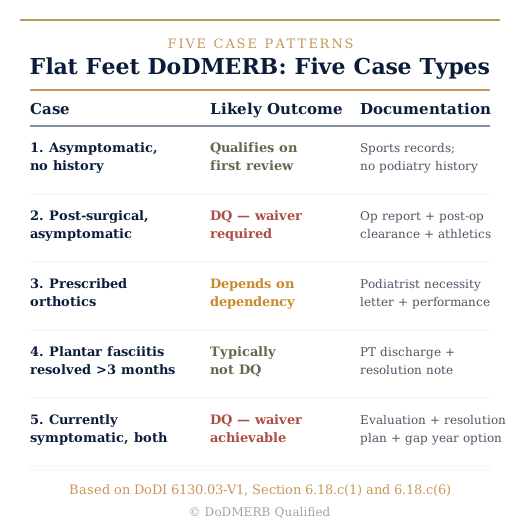
| Case | DoDI Trigger(s) | Likely Outcome | Documentation Priority |
|---|---|---|---|
| 1. Flexible, asymptomatic, no history | None | Qualifies on first review | Sports participation, no podiatric history |
| 2. Post-surgical flatfoot | 6.18.c(5), if the foot is rigid or symptomatic now | Depends on the foot today | Operative report, current flexibility statement, athletic evidence |
| 3. Currently using prescribed orthotics | 6.18.c(5) symptomatic prong; USCGA orthotic clause | Depends on dependency | Podiatrist necessity letter, performance with/without orthotics |
| 4. One plantar fasciitis episode, fully resolved | None, if it never recurred | Typically clears | PT discharge, resolution note, complete episode history |
| 5. Rigid or symptomatic feet plus recurrent plantar fasciitis | 6.18.c(5) and 6.18.c(7) | DQ on both, waiver achievable | Resolution plan, full evaluation, gap-year option |
Case 1: Flexible, Asymptomatic Flat Feet, No History
Profile: Diagnosed with flat feet at a sports physical or pediatric visit. The arch reforms on tiptoe. No chronic pain. Plays sports. Wears regular athletic shoes.
Most likely outcome: Qualifies on first review. Documentation focus: current sports participation, no podiatry visits, no orthotic prescriptions, and ideally one note confirming the flatfoot is flexible. Risk to watch: do not volunteer history that does not exist, and do not introduce new orthotics in the year before the exam.
Case 2: Post-Surgical Flatfoot
Profile: Had a tendon transfer, calcaneal osteotomy, fusion, or similar correction. Recovered. Now active.
Most likely outcome: it depends on the foot the surgery left behind, not on the fact of the surgery. Section 6.18.c(5) names no surgical trigger, so a reviewer applies the same two words to your child as to everyone else. Is the foot rigid today? Is it symptomatic today? A procedure that fuses joints removes motion by design, so a post-fusion hindfoot may well read as rigid, while a soft-tissue repair on a foot that now moves normally may not.
Documentation focus: the full operative report, post-op clinical notes, imaging showing the healed correction, an explicit current statement on flexibility and symptoms from a podiatrist or the operating surgeon, and athletic evidence such as varsity participation or weighted ruck training.
This case is widely misreported. The claim that any flatfoot surgery is automatically disqualifying overstates the standard. The honest read is narrower and far more actionable: get the current condition of the foot documented in the regulation's own vocabulary, then let the reviewer apply it.
Case 3: Currently Using Prescribed Orthotics
Profile: Custom inserts prescribed by a podiatrist, worn daily or for sports.
Most likely outcome: Depends on whether the orthotics indicate dependency or are precautionary. Documentation focus: a podiatrist letter clarifying necessity versus preference, athletic performance with and without orthotics, and a recent assessment of whether orthotics are still needed.
USCGA-specific risk: Coast Guard Academy treats rigid prescribed orthotics as an independent trigger. If USCGA is on the list, get a podiatrist evaluation on discontinuation.
Case 4: One Plantar Fasciitis Episode That Fully Resolved
Profile: A single episode of plantar fasciitis. Treated with PT or a short anti-inflammatory course. Fully resolved. No return of symptoms since.
Most likely outcome: Typically not disqualifying, if the documentation is clean and the record genuinely shows one episode. Documentation focus: PT discharge summary, podiatrist resolution note, and current sports participation.
The risk here is not the calendar. It is a "recurrent" classification. Pull records from every provider your child has seen, count the episodes honestly, and know that number before DoDMERB does. Two or three documented flare-ups across high school can read as recurrent regardless of how long ago the last one was.
Case 5: Rigid or Symptomatic Flat Feet Plus Recurrent Plantar Fasciitis
Profile: A rigid or currently symptomatic flatfoot AND a history of repeat plantar fasciitis.
Most likely outcome: DQ under both 6.18.c(5) and 6.18.c(7). Waiver achievable but requires the longest documentation lead time. Documentation focus: clinical resolution plan, conservative management trial, and a full functional evaluation.
Honest read: this is the case where families should weigh whether the timeline supports the application year or whether a deferred application makes sense. Be clear-eyed about which part a gap year helps. Current symptoms can resolve with time and treatment. A rigid foot and a documented recurrence pattern do not go away on a calendar, so extra time is worth taking only if you spend it building the waiver package. ROTC scholarship recipients have until December of their college freshman year to complete medical qualification, which gives more runway than the academy's April 15 deadline.
After this section, you can identify which of the five cases matches your child and what documentation matters most for that pattern.
Related: DQ Code D223.20: Pes Planus
Documentation: What Actually Decides the Waiver
The Service Medical Waiver Authority will never meet your child. They will read a folder. Waiver decisions are paper decisions. The strongest applicant in person can lose to a thinner candidate with a better-documented file. Build the file before the DoDMERB exam, not after the DQ letter arrives.
One important rule: keep records organized at home. Do not bring them to the DoDMERB exam, and do not submit anything proactively. Records are only relevant when DoDMERB issues a Remedial (AMI) request and tells you exactly what to upload.
Clinical Records to Have Ready
- Original diagnosis records (if any)
- All podiatry, orthopedic, sports medicine, and primary care notes mentioning feet, gait, or arches
- Imaging reports including X-rays, MRIs, and weight-bearing views
- Operative reports for any surgical correction, with full pre-op, op note, and post-op clinical resolution
- Orthotic prescription history, or proof there is none
- A recent functional clearance from a current podiatrist or sports medicine provider stating the child is fully active without limitation, and stating in plain terms whether the flatfoot is flexible or rigid and whether it is symptomatic today
Athletic and Functional Evidence
- Varsity sports rosters, season stats, and attendance records
- Coach letters specifically addressing running, jumping, endurance, and footwear tolerance
- Athletic trainer notes, especially across multiple seasons
- ROTC, JROTC, or Scout activity logs showing ruck marches, hikes, and drills
- Race times and fitness test scores (CFA, mile times, shuttle run)
The Personal Statement
A short candidate-written statement explaining: when the diagnosis was made, what treatment occurred, current activity level, and why the candidate is confident in austere-environment performance. Honest, direct, no overstatement. Full disclosure on the DD Form 2807 is the path of officer integrity, and waiver authorities can tell when a statement is hedged.
What NOT to Submit
- Generic "my child is fine" parent letters with no clinical backing
- Old records from when the child was symptomatic without context on resolution
- Conflicting provider notes (resolve discrepancies before submission)
- Speculation about what the surgeon meant. Get a clarifying letter instead.
When the SMWA Wants More
The waiver authority can order a contracted orthopedic exam through CIV Team. Do not fear this. It is an opportunity to demonstrate current function under controlled conditions. Prepare your child for a normal podiatric and orthopedic evaluation focused on gait, strength, and pain assessment.
DoDMERB Qualified
Not sure what records DoDMERB will ask for after a flat feet DQ?
LTC Kirkland reviews your student's medical history and documents a clear path through the remedial and waiver process before you receive the DQ letter.
After this section, you have a concrete documentation framework and understand why building the file before the DoDMERB exam, not after the DQ, is the single highest-leverage move you can make.
The Waiver Process: Who Decides, How Long It Takes, What Tips the Call
DoDMERB does not grant waivers, and the people who do are different at every commissioning source. When DoDMERB issues a DQ, the file moves to the Service Medical Waiver Authority (SMWA) at the academy or ROTC command your child is applying through. That is where the waiver call gets made.
Waiver Authority by Commissioning Source
| Commissioning Source | Waiver Authority | Typical Stance on Foot Conditions |
|---|---|---|
| West Point / Army ROTC | Cadet Command Surgeon (Fort Knox) for AROTC; USMA Command Surgeon + Admissions | Most flexible, broad case-by-case discretion |
| USNA / NROTC | BUMED (Bureau of Medicine and Surgery) | Reasonable, documentation-driven |
| USAFA / AFROTC | Academy Command Surgeon; AFROTC Command Surgeon | Systematic, standards-focused |
| USCGA | Academy Medical Review Board | Strictest, especially on orthotic use |
| USMMA | No independent waiver authority; follows DoDMERB recommendation | DoDMERB outcome stands |
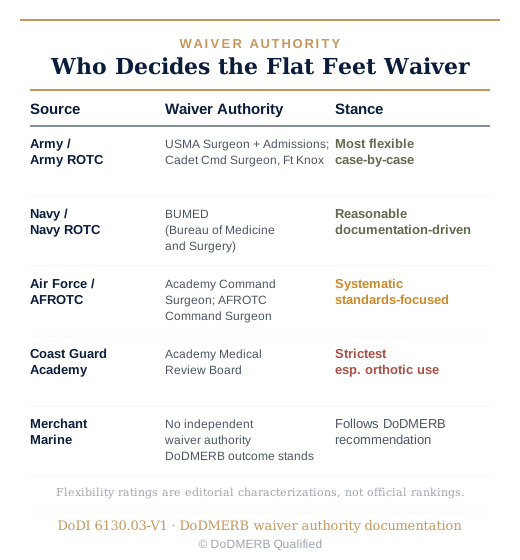
How Long the Process Takes
- DQ letter from DoDMERB: typically within weeks of exam completion
- AMI (Additional Medical Information) request and response: typically weeks to 60 days
- SMWA review and decision: weeks to several months, depending on commissioning source and complexity
- Total realistic budget: several months from exam to waiver decision; plan for 4-6 months in complex cases
Academies require medical qualification by approximately April 15 of the entry year. ROTC scholarship recipients have until approximately December of their college freshman year, which gives ROTC applicants significantly more time to resolve medical issues.
Competitiveness Matters
Waivers are typically granted only to competitive applicants. A weak academic and athletic file with a flat feet DQ is far less likely to receive a waiver than a strong file with the same DQ. Early documentation and a strong overall application work together.
If the Waiver Is Denied
- Request the specific reason for denial and determine whether new documentation could change the call.
- Consider applying to a different commissioning source with different standards. Army ROTC tends to be more flexible than the Coast Guard Academy on foot conditions.
- Reapplication for the next cycle is possible if the underlying condition changes.
After this section, you know who actually decides the waiver, what timeline to plan for, and why your child's overall competitiveness matters as much as the medical file.
Frequently Asked Questions
Are flat feet automatically disqualifying for the Service Academies or ROTC?
No. Flexible, asymptomatic flat feet are typically qualifying. DoDI 6130.03-V1, Section 6.18.c(5) triggers a DQ when the pes planus is rigid OR symptomatic. If the arch reforms on tiptoe and the foot causes no pain or dysfunction, the diagnosis alone is rarely the problem, and many academy and ROTC candidates with diagnosed flat feet qualify on first review without a waiver.
My child had flat feet surgery years ago and is fully recovered. Are they still disqualified?
Not automatically. Section 6.18.c(5) names no surgical trigger, so a reviewer looks at the foot your child has now and asks the same two questions asked of everyone: is it rigid, and is it symptomatic? Ask the operating surgeon or a current podiatrist to answer both directly in writing, and pair that with the operative report and current functional evidence. If the answer to either question is yes, the path forward is the SMWA waiver process.
Will wearing orthotics get my child disqualified?
It depends. Over-the-counter inserts used preventively are usually not flagged. Prescribed custom orthotics, especially rigid ones, can signal dependency and trigger scrutiny. The Coast Guard Academy specifically lists "use of rigid, prescribed orthotics" as independently disqualifying. Get a podiatrist's opinion on whether orthotics are still medically necessary.
Does plantar fasciitis disqualify by itself?
Yes, when it is current or recurrent. DoDI 6.18.c(7) handles plantar fasciitis separately from flat feet and sets no time window. One episode that resolved and never returned typically clears, provided documentation shows clinical resolution and current sports participation. A pattern of repeat flare-ups can be cited as recurrent no matter how long ago the last one was.
Is DoDMERB the same as the MEPS exam?
No. MEPS screens enlisted applicants. DoDMERB reviews exams for Service Academy and ROTC scholarship candidates. The exam is conducted by CIV Team-contracted civilian providers, the review is paper-based, and waivers go through the Service Medical Waiver Authority, not a same-day MEPS doctor.
My child plays varsity sports without pain. Why would DoDMERB care about flat feet?
DoDMERB reviews what the records show. A pediatric chart noting "pes planus" from years ago can surface in review. Athletic participation helps the case but does not erase the diagnosis. The strongest position is documented sports performance plus a current podiatrist note confirming asymptomatic, fully active status.
Which service is most flexible on flat feet waivers?
Army ROTC (Cadet Command Surgeon at Fort Knox) is generally the most flexible, with broad case-by-case discretion. The Coast Guard Academy applies the strictest reading, particularly on orthotic use. Navy and Air Force fall in between. Apply broadly when foot conditions are in play, since outcomes can differ significantly across services.
Should we delay the DoDMERB exam to outrun a plantar fasciitis flare-up?
There is no window to outrun. DoDI 6.18.c(7) reaches plantar fasciitis that is current or recurrent, with no time threshold attached, so a delay does not clear a recurrence pattern off the record. Delaying is worth considering only when your child is symptomatic right now and treatment is expected to resolve it, and even then the value comes from the documented resolution, not from the gap on the calendar.