Resources
Helpful articles, guides, and updates on the DoDMERB process.
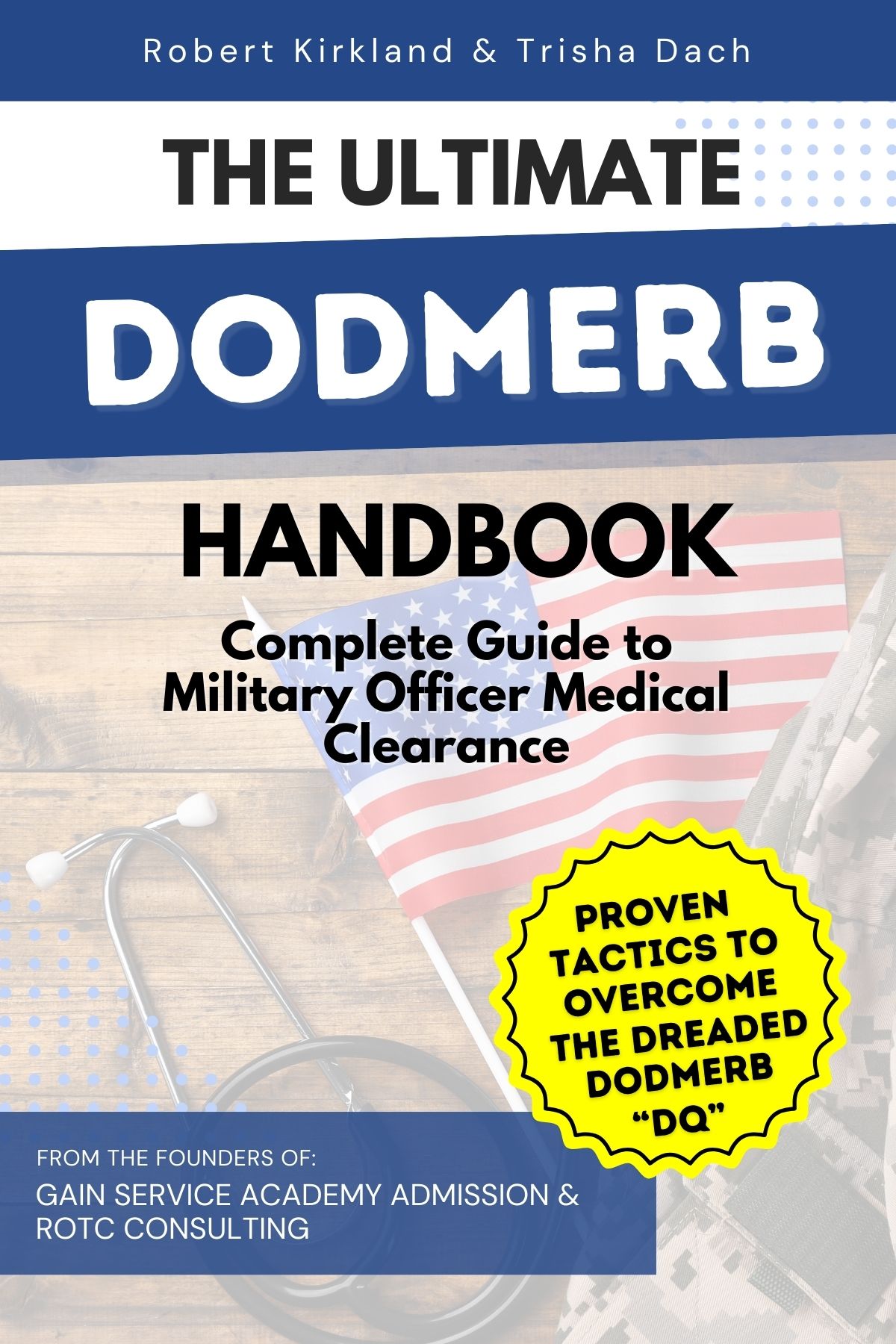
The Ultimate DoDMERB Handbook
Complete Guide to Military Officer Candidate Medical Clearance: Proven Tactics to Overcome the Dreaded DODMERB DQ
Written by a retired Army Lieutenant Colonel and an Air Force veteran who have guided hundreds of candidates successfully through the DoDMERB process, The Ultimate DoDMERB Handbook provides expert guidance and insider tips to help you through this critical part of your application. With this book, you'll be able to approach DoDMERB with confidence and put yourself in the best position to achieve your dream of becoming a military officer.
See the HandbookAlready read the book? The next step is a personalized consultation.
Video Library
DoDMERB Explained
DoDMERB Heart Conditions And Waivers Explained
DoDMERB heart conditions can be a major concern for candidates, even though the heart section generally produces far fewer disqualifications. In this heart deep dive, retired Army Lieutenant Colonel Rob Kirkland and retired Army Colonel and physician Dr. Arthur Cajigal walk through the heart and chest standards in DoDI 6130.03 and how DoDMERB and the waiver authorities read them in real cases. They explain what DoDMERB is really guarding against. Anything that could cause sudden incapacitation, or that strains the heart under the physical demands of the military. Dr. Cajigal covers innocent childhood murmurs versus true valvular disease, and why an echocardiogram is the test that settles most murmur cases. From there they cover the congenital defects they actually saw at DoDMERB: patent foramen ovale, atrial septal defect, and patent ductus arteriosus, including what closure and a normal echo within 12 months means for qualification. They break down the difference between a single vasovagal fainting episode and recurrent syncope, why documentation is everything, and how arrhythmias like SVT and Wolff Parkinson White are treated after a catheter ablation. Finally they explain the two hard lines in this section. POTS, which is very difficult to waive, and myocarditis or pericarditis, where the 12 month recovery window and a normal echo drive the decision. If your family needs help navigating a DoDMERB disqualification or waiver, contact us about DoDMERB Consulting: https://dodmerbqualified.com/start 0:00 Heart Standards Scope 1:49 DoDMERB Heart Disqualifiers Overview 4:15 Innocent Heart Murmurs vs Valvular Disease 6:39 Congenital Heart Defects: PFO, ASD, PDA 8:56 Fainting: Vasovagal vs Recurrent Syncope 10:36 Arrhythmias, SVT, WPW And Ablation Proof 12:47 POTS And Why It Is Nearly Unwaiverable 14:22 Myocarditis And Pericarditis After COVID About this series: Retired Army Lieutenant Colonel Robert Kirkland and retired Army Colonel and physician Dr. Arthur Cajigal break down the DoDMERB medical qualification process chapter by chapter. Dr. Cajigal served as Command Surgeon at USMEPCOM and Army Cadet Command, and as the Army Physician Reviewer and Chief at DoDMERB at USAFA.
Want Personalized Guidance?
Our resources give you the foundation. A consultation gives you a strategy built for your student's specific situation.
Book Your Consultation