Your student has worked for years toward a military academy or ROTC scholarship. Now you discover that their childhood ADHD diagnosis could derail everything. The panic is real, and you are not alone.
ADHD and DoDMERB waivers are among the most common concerns parents face during the commissioning process. Mental health waivers, including ADHD, carry an overall approval rate of approximately 55%, according to Department of Defense data reported by The War Horse. That number covers all mental health conditions across officer and enlisted accessions; ADHD-specific rates vary by service.
ADHD that meets DoDI 6130.03 criteria will result in a disqualification. But a disqualification is not the end. Waivers are available and commonly granted when families understand the process and prepare properly.
West Point Candidate Wilson had been off medication for 19 months when his waiver was approved mid-December. His appointment letter arrived in January. The difference between candidates who succeed and those who struggle is not the ADHD itself. It is whether parents understand the specific DoDMERB standards and build their timeline accordingly. — From our published case study at Gain Service Academy Admission
This guide walks you through eight actionable steps, from understanding the regulations through waiver approval. You will learn the DoDI 6130.03 disqualification standard (24 months medication-free), how each service's waiver flexibility differs, documentation strategies that work, and the critical differences between Academy and ROTC waiver processes.
Key Takeaways
- ADHD meeting DoDI 6130.03 criteria IS disqualifying, but waivers are available and commonly granted
- DoDI 6130.03 requires 24 months medication-free. Services differ in waiver flexibility: USAFA has waived at 15 months, Navy at 12 months, Army is case-by-case
- 504 plans must be formally terminated through school channels, even if your student has not used accommodations in years
- DoDMERB determines medical qualification status, but the academy or ROTC program decides whether to initiate a waiver
- ROTC scholarship recipients are automatically considered for a waiver after selection
- Families who gather documentation before DoDMERB requests it are better prepared, but submit only what DoDMERB or the waiver authority asks for
- A neuropsychological re-evaluation showing no current ADHD is the strongest possible waiver evidence
Step 1: ADHD DoDMERB Requirements: What the Regulation Actually Says
ADHD that meets DoDI 6130.03 criteria is disqualifying. That is the starting point, not a reason to panic. The regulation is specific about what triggers a disqualification, and waivers exist for each condition.
DoDI 6130.03, Section 6.28.a lists four ADHD-related conditions that result in disqualification:
DoDI 6130.03, Section 6.28.a — The following conditions are disqualifying:
- A recommended or prescribed Individualized Education Program (IEP), 504 Plan, or work accommodations after the 14th birthday (the plan being recommended or prescribed is disqualifying even if it was never used)
- A history of comorbid mental disorders associated with ADHD
- Prescribed medication for ADHD in the previous 24 months
- Documentation of adverse academic, occupational, or work performance attributed to ADHD
Each of these is a disqualification, not a permanent barrier. Waivers are available for all four, and the path through each is well-documented.
IEP, 504 Plan, or Work Accommodations After the 14th Birthday
DoDMERB views active accommodations as evidence that your student cannot function at required levels without external support. This includes extended test time, preferential seating, reduced homework, and any other modifications documented in school records.
History of Comorbid Mental Disorders
ADHD combined with anxiety, depression, or oppositional defiant disorder creates complexity that concerns military evaluators. Records showing treatment for multiple conditions or prescriptions for anti-anxiety medications alongside ADHD medication trigger additional scrutiny.
Prescribed Medication in the Previous 24 Months
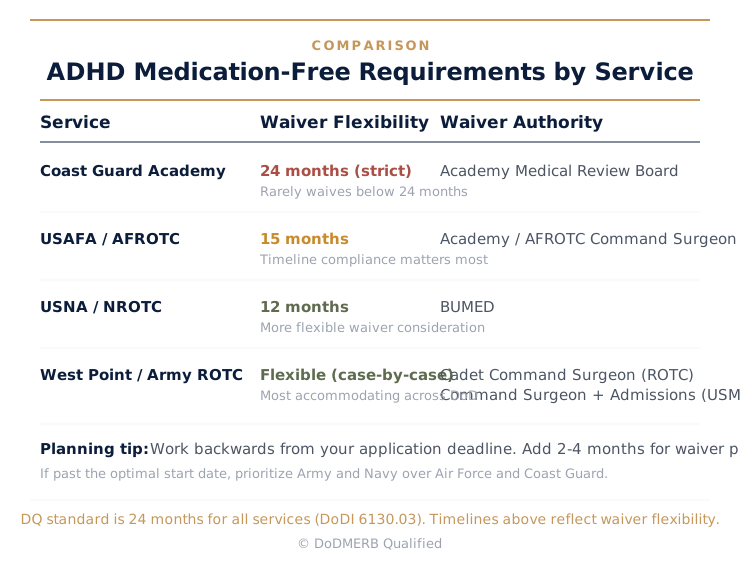
This is the timeline most parents focus on first. The DoDI 6130.03 disqualification standard is 24 months medication-free. That is the baseline for all services. However, individual services differ in their waiver flexibility. Some services are known to grant waivers with shorter medication-free periods. Step 2 breaks down these differences.
The key insight: 24 months is the disqualification standard. Service-specific timelines (15 months for USAFA, 12 months for Navy) represent waiver flexibility, not different DQ standards.
Documentation of Adverse Academic, Occupational, or Work Performance
If records show ADHD caused failing grades, disciplinary issues, or job terminations, this creates a documented impairment pattern. Evidence includes grade drops when medication stopped, disciplinary records linked to ADHD behaviors, or employer documentation of performance issues.
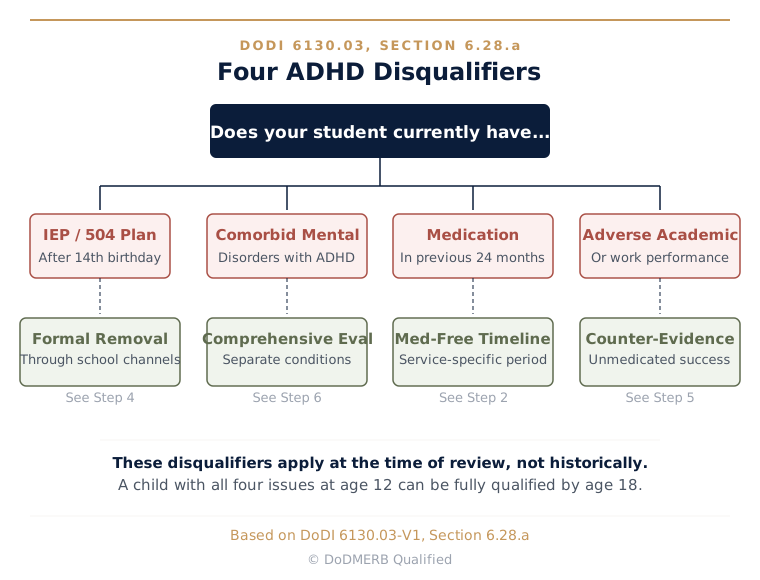
After this step, you should be able to identify which disqualifiers currently apply to your student and have a preliminary sense of the timeline needed.
Step 2: Service-Specific Medication Timelines: Which Doors Are Open?
Two identical applicants with the same ADHD history, same grades, and same leadership record can get different outcomes depending on which service they target. The answer is waiver flexibility.
The DoDI 6130.03 disqualification standard is 24 months medication-free for all services. However, each service has different waiver flexibility. Some are known to grant waivers with shorter medication-free periods. Understanding these differences early determines which doors remain open for your student.
Planning Your Timeline
Work backwards from your target application deadline. DoDMERB medical exams typically occur late junior year or early senior year. Add 2-4 months for waiver processing plus buffer for documentation requests.
After this step, you should have specific dates on your calendar and clarity about which services remain realistic options.
DoDMERB Qualified
Worried about making a costly mistake during the DoDMERB process?
Download our free guide covering the 5 most common errors families make, including why stopping medications before the exam can backfire.
DoDMERB Qualified
Not sure which services are still realistic for your student's ADHD timeline?
We evaluate your student's specific medication history and timeline against each service's waiver flexibility, so you stop guessing and start planning.
Step 3: Discontinuing Medication: Timing, Tapering, and Documenting the Transition
The worst time to stop ADHD medication is mid-semester during AP exams. The second worst time is without a physician's guidance. Both happen constantly to families who did not plan ahead.
Stopping medication requires coordination with your student's prescribing physician, thoughtful timing, and documentation of continued success throughout the transition.
Coordinate with Your Physician
Schedule an appointment to discuss military academy goals and service-specific timelines. Request gradual tapering if medically appropriate. Abrupt discontinuation can trigger adjustment challenges that affect academic performance.
Get written documentation that discontinuation was medically supervised. Ask for a letter stating medication was prescribed for childhood ADHD and discontinuation was appropriate based on maturity.
Choose the Right Timing
The ideal time to stop medication is summer. Your student has no academic pressure, time to adjust, and months before grades matter again.
Avoid mid-semester transitions, exam periods, and the college application crunch. These high-stress periods risk creating the adverse academic performance DoDI 6130.03 specifically mentions as a disqualifier.
Document the Transition
Keep records of the date of last prescription fill. Pharmacy records showing when prescriptions were last filled become important evidence.
Track academic performance before, during, and after medication. Transcripts should show stability or improvement after stopping. Document extracurricular commitments maintained, including sports, clubs, and jobs.
After this step, your student should be medication-free for the required period with documented academic stability.
Step 4: 504 Plan and IEP Removal: Why Formal Termination Is Non-Negotiable
Your student has not used their extended test time in two years. That seems like it should not matter. But DoDMERB sees an active 504 plan, and that is a disqualifier regardless of whether accommodations are being used. The existence of accommodations matters, not whether your student is actively using them.
The 504 Termination Process
Send a written request to your school's 504 coordinator stating your student no longer requires accommodations and your family wishes to formally terminate the plan. Both parents should attend the committee meeting. The school will evaluate whether your student still qualifies. If performing at grade level without accommodations, termination is appropriate.
Stop All Accommodations
All accommodations must end: extended test time (classroom and standardized), preferential seating, reduced homework, and any other modifications.
If your student took the SAT or ACT with extended time, the College Board has this on record. Future tests must be taken without accommodations. Consider retaking if early scores used extended time.
IEP Termination
IEP termination is more complex than 504 removal. It requires a formal meeting with the school team and documentation that your student can succeed in general education without support. Follow the same documentation principles. Get the termination in writing.
After this step, you should have written termination documentation and your student should be taking all tests without accommodations.
Step 5: Building Academic Proof: Every A Without Medication Is Evidence
Parents often focus intensely on the medication timeline but forget to build positive evidence during that period. Arriving at DoDMERB with nothing to show for the medication-free period weakens the waiver case significantly.
What Makes Evidence Compelling
Rigor matters. AP classes, varsity sports, and demanding jobs demonstrate high-level function without medication. Consistency matters. A multi-year track record is stronger than one good semester. Third-party validation matters. Teachers, coaches, and employers saying positive things carry weight. Comparison matters. If your student performs better than they did with medication, document this clearly.
Academic Documentation
Request official transcripts showing grades before, during, and after medication. Highlight GPA stability or improvement and note AP or honors courses taken while unmedicated. Rigorous coursework is particularly compelling.
Gather standardized test scores taken without accommodations (SAT, ACT, AP exams). If your student has earlier scores with accommodations, improvement on subsequent unaccommodated tests creates powerful evidence.
Teacher and Third-Party Letters
Request letters from 2-3 teachers who taught your student while unmedicated. Ask them to address focus, completion of work, classroom behavior, and organization. These are character evidence demonstrating your student functions well without medication.
Coach or employer letters further strengthen the case. Anything demonstrating sustained attention and commitment helps.
After this step, you should have a folder with transcripts, unaccommodated test scores, and two to three third-party letters documenting medication-free success.
Step 6: Neuropsychological Re-Evaluation: Challenging the Original Diagnosis
What if your student never actually had ADHD? Many childhood diagnoses were based on brief questionnaires and rushed appointments, not comprehensive neuropsychological testing. A proper evaluation might tell a very different story.
The strongest waiver case is not "ADHD is under control." It is "the childhood diagnosis was inaccurate or the condition has resolved."
When Re-Evaluation Makes Sense
Consider re-evaluation if the original diagnosis was based on questionnaires only without formal testing, if your student was young (under 10) at diagnosis, if there is no clear functional impairment history, or if your student has thrived off medication for an extended period.
The Testing Battery
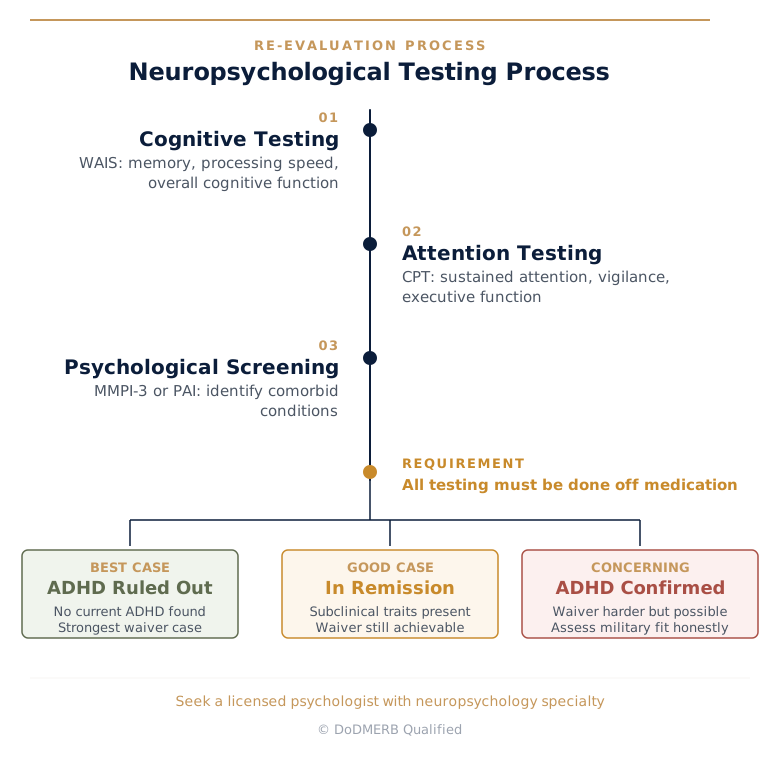
A comprehensive neuropsychological evaluation includes cognitive testing (WAIS for overall cognitive function, memory, processing speed), attention-specific testing (continuous performance tests for sustained attention, vigilance, executive function), and psychological screening (MMPI-3 or PAI to identify comorbid conditions that could complicate the waiver).
Possible Outcomes
Best case: ADHD ruled out. Testing shows no current ADHD. This significantly strengthens the waiver case because there is no current condition to waive.
Good case: ADHD in remission. Some traits present but subclinical, no functional impairment. A waiver is still achievable.
Concerning case: ADHD confirmed. A waiver is still possible but harder. Be honest about military fit if this is the result.
Seek a licensed psychologist with neuropsychology specialty. Experience with military or aviation medical evaluations is helpful but not required.
After this step, you should have a neuropsychological evaluation report, ideally showing ADHD ruled out or in remission, with all testing conducted off medication.
DoDMERB Qualified
Unsure how to present a complex ADHD history to DoDMERB?
We know what the waiver authority looks for, and what raises red flags.
Step 7: Documentation Package: Gather Everything Before DoDMERB Asks
DoDMERB requests additional medical information. You call your pediatrician, and they are on vacation for two weeks. The psychologist who did the evaluation moved practices. The school cannot find the 504 termination letter. This scenario happens constantly to unprepared families.
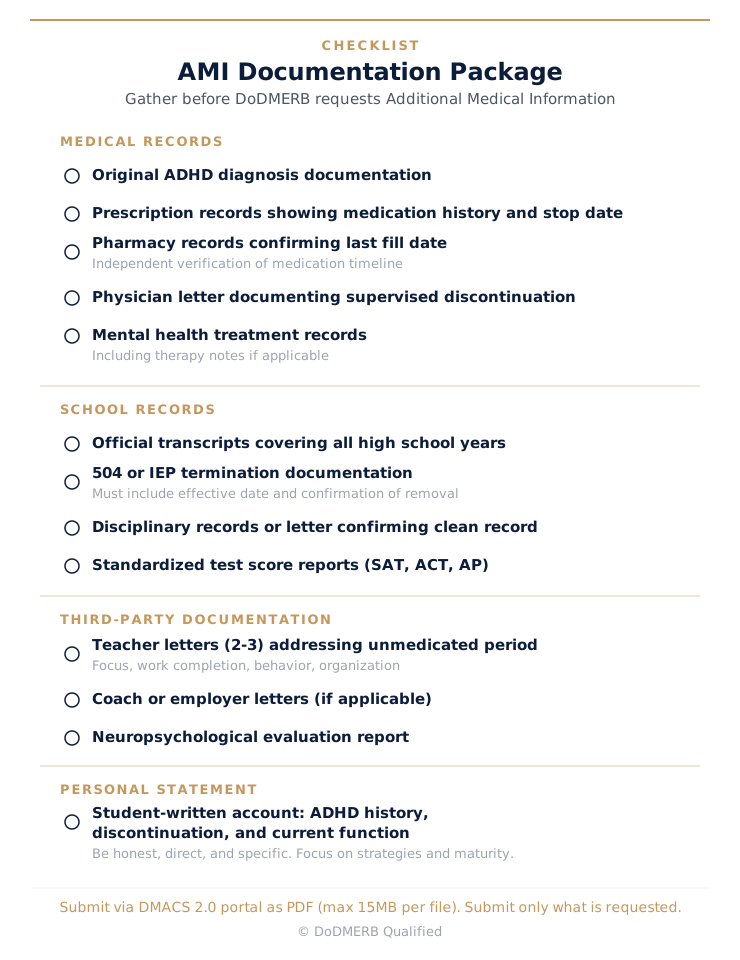
The solution is preparation, not preemptive submission. Gather all records proactively so you are ready to respond quickly when DoDMERB or the waiver authority requests specific documentation. Do not submit unsolicited records. Submit only what is requested.
DoDMERB can request Additional Medical Information (AMI) at any point during the review process. There is no widely published hard deadline for your response, but the practical urgency is real. Waiver processing takes weeks to months, and academies generally need medical qualification resolved by approximately April 15 of the entry year.
Medical Records
- Original ADHD diagnosis documentation (if available)
- All prescription records showing medication history and stop date
- Pharmacy records confirming last fill date (independent verification)
- Physician letter documenting supervised discontinuation
- Mental health treatment records, including therapy notes if applicable
School Records
- Official transcripts covering all years of high school
- 504 or IEP termination documentation (with effective date)
- Disciplinary records or letter confirming clean record
- Standardized test score reports (College Board, ACT)
Third-Party Documentation
- 2-3 teacher letters addressing the unmedicated period
- Coach or employer letters (if applicable)
- Neuropsychological evaluation report (if obtained)
Personal Statement
- Your student's written account of ADHD history, medication discontinuation, and current function
- Focus on strategies developed and maturity gained, not minimizing ADHD history
- Be honest, direct, and specific
When DoDMERB Requests Documentation
When DoDMERB requests additional information, upload the requested documents through the DMACS 2.0 portal at dodmerb.tricare.osd.mil. Navigate to the Additional Actions Required section. All documents must be in PDF format with a maximum file size of 15MB per file. If larger, compress or split into multiple emails to your assigned case manager. Reach out to your assigned case manager for guidance on what to include.
After this step, you should have an organized folder with all documentation gathered, formatted as PDFs, and ready to submit when DoDMERB or the waiver authority requests specific items.
Step 8: Waiver Authorities: Who Decides and How to Prepare
Your waiver paperwork does not go to DoDMERB for a decision. DoDMERB determines whether your student meets medical standards. If they do not, the academy or ROTC program, not DoDMERB and not your family, decides whether to initiate a waiver review.
| Program | Waiver Authority | Notes |
|---|---|---|
| West Point | Command Surgeon + Admissions | Holistic review, athletics and leadership factor in |
| Army ROTC | Cadet Command Surgeon, Fort Knox | Most flexible, case-by-case approach |
| USNA | BUMED | Generally reasonable with ADHD waivers |
| NROTC | BUMED | Contact: grlk_nrotc_medical@us.navy.mil |
| USAFA | Academy Command Surgeon | Known to waive at 15 months med-free |
| AFROTC | AFROTC Command Surgeon | Timeline compliance matters most |
| Coast Guard Academy | Academy Medical Review Board | Strictest standards, have a backup plan |
Academy vs. ROTC: A Key Difference
Academy waivers tend to be holistic. Athletic ability, leadership, and academics all factor into the decision. Candidate liaisons can sometimes advocate for strong candidates. ROTC waivers are strictly medical evaluations. Scholarship and medical clearance operate as separate tracks with less advocacy opportunity.
If the Waiver Is Denied
Request the specific reason. Determine if additional documentation would help. Consider appeal if new evidence exists. Approval by one service does not guarantee approval by another, and denial by one service does not mean denial by all. Apply broadly.
After this step, you should know which authority decides your student's waiver and have documentation tailored to their priorities.
DoDMERB Qualified
Every ADHD waiver case is different.
LTC Kirkland (Ret.) personally reviews each situation and develops a strategy tailored to your student's ADHD history, medication timeline, and service goals.
Frequently Asked Questions
Can my student take ADHD medication during the application process if they are struggling?
No. Any prescription restarts the medication-free clock entirely. Consider non-medication support like tutoring and organizational coaching. If your student struggles significantly without medication, honestly assess whether the military path is right.
What if my student was diagnosed with ADHD but never took medication?
This is generally easier. The medication timeline does not apply. However, 504 or IEP accommodations after age 14 still require formal termination. A neuropsychological re-evaluation showing no current ADHD strengthens the case considerably.
Does therapy or counseling for ADHD count against my student?
Therapy itself is not disqualifying. However, if therapy records mention anxiety, depression, or other conditions alongside ADHD, expect questions. Document what therapy addressed and provide evidence that other conditions have resolved.
What if my student was diagnosed at age 6 but stopped medication at age 10?
Pre-14 history is less concerning. The key question: did accommodations continue after the 14th birthday? A long medication-free track record from age 10 through 18 is strong evidence of resolved ADHD and typically easier to waive.
Can we apply to multiple academies with different waiver timelines?
Yes. Each service evaluates independently. Your student may receive approval from Army, denial from Coast Guard, and still be under review by Navy simultaneously. Apply broadly.
What if DoDMERB requests records we do not have?
Contact original providers first. Medical records are typically retained 7+ years. If records were destroyed, provide a written statement explaining the situation and documenting your attempts to obtain them. School records from IEP or 504 meetings may contain copies.
When should we tell my student's doctor about Academy or ROTC plans?
Immediately. Your physician needs to understand timeline constraints for appropriate discontinuation guidance. Ask them to document everything: reasons for stopping medication and observations about your student's function afterward.
What if my student is already a senior and still on medication?
Army ROTC is most realistic given the flexible timeline. Navy at 12 months is possible if your student stops immediately. Air Force and Coast Guard are unlikely without a gap year.
Does childhood ADHD affect security clearance later?
Generally no, if properly disclosed and the waiver was granted. Security clearance investigators look for deception patterns, not ADHD history. Lying about ADHD is far worse than the history itself.
DoDMERB Qualified
Need clarity before your student submits medical records?
We help families identify the real disqualifier, spot missing documentation, and build a cleaner DoDMERB strategy before waiver review begins.